
Cover Up Tattoo Before and After Transformation
the Process: Start to Finish
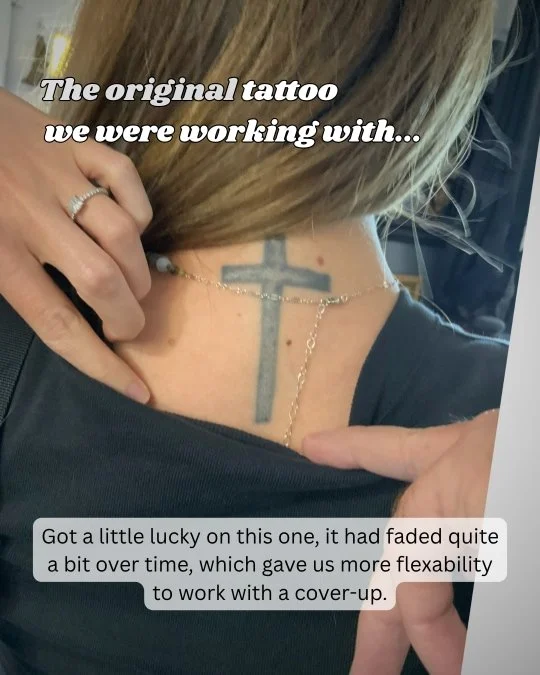
This cover up tattoo before and after started with a small cross that had faded quite a bit over time. That fading helped more than you might think. The lighter the original tattoo is, the more flexibility there is when building something new over it.
When a tattoo is dark and saturated, you’re working against it the whole time, and sometimes a few laser treatments can go a long way. In this case, we had some room to move, which made the process smoother.
Working Out the Design
For this cover up tattoo, I designed a peony and laid it over the original piece to make sure everything would hide cleanly. Placement matters more than anything here. You’re not just making something look good, you’re camouflaging whats underneath.
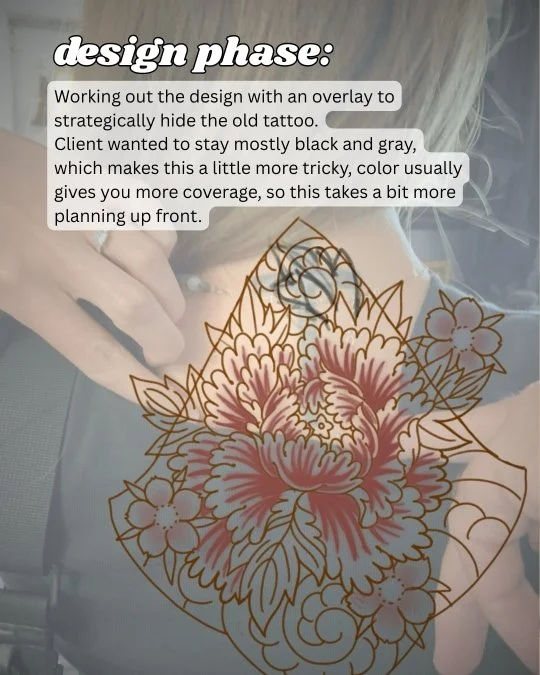
The client wanted mostly black and gray, which makes a cover up tattoo a little more technical. Color tends to give you more opacity, but black and white can yield similar results. With black and gray, you have to rely on structure, contrast, and flow to break up what’s underneath.
After the First Session
After the first session, the cover up tattoo was mostly there. The old cross was broken up, the shape was established, and it was already reading well.
At this stage, it looked solid and could have been left alone if needed. But with cover up tattoos, that extra pass can make a noticeable difference, especially in black and gray.
Final Sitting and Healed Result
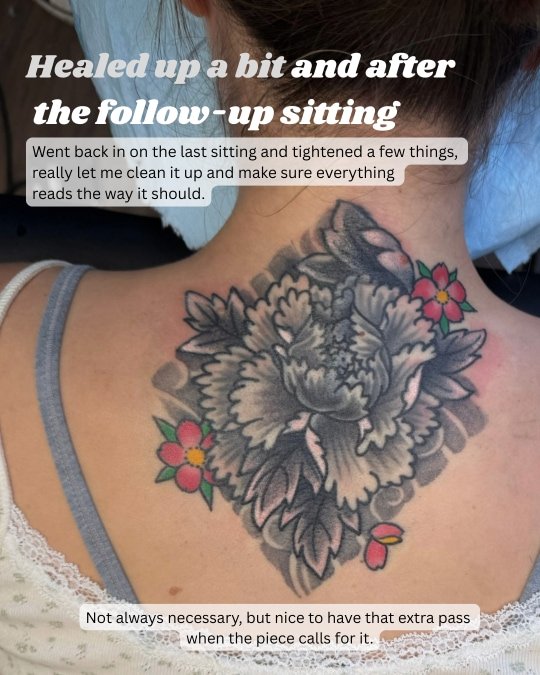
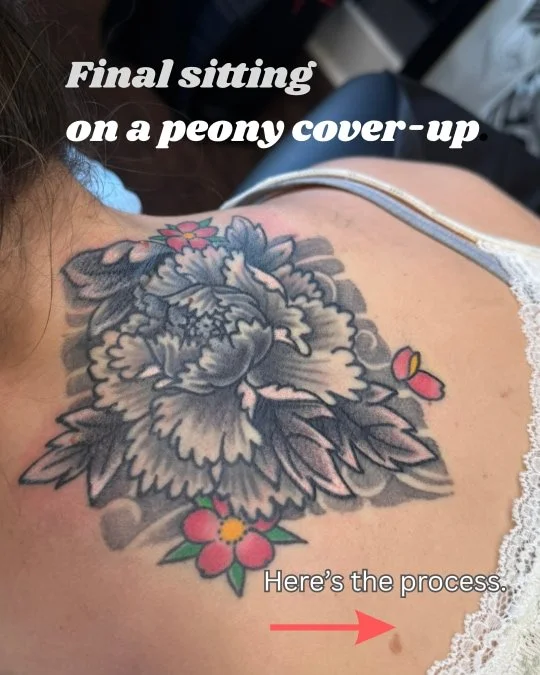
Once it healed, we went back in for one more sitting. This is where I tightened things up, reinforced a few areas, and made sure everything reads clean from a distance and up close.
That second pass isn’t always necessary, but when a design calls for it, it’s worth doing. Small adjustments in contrast and edges can completely change how the final piece holds up over time.
Thinking About a Cover Up Tattoo?
If you’re considering a cover up tattoo, the design is the most important part of the process. It’s not just about what you want to see, it’s about what will actually work over what’s already there.
Faded tattoos give you more options. Black and grey can work, but it takes more planning. And sometimes, a second sitting is what takes it from decent to solid.
A consultation is the best way to move forward, meeting in person, so we can get a good idea of what could work.
This article shows the process of a cover up tattoo where a faded cross was reworked into a black and grey peony over two sittings. It explains how fading affects design options, why black and grey cover ups require more planning, and how a second session can improve the final result.