
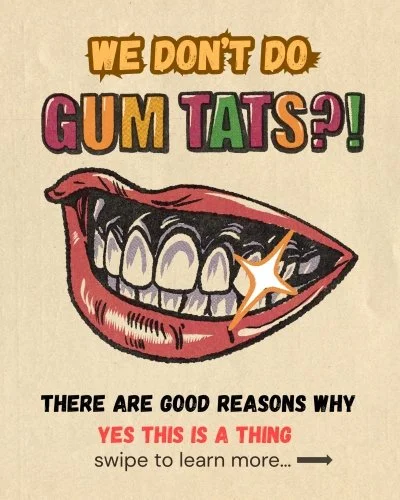
A working American tattoo artist on the Ethiopian Niksat tradition, the modern "blackout gums" trend, and why we don’t offer it here.
Chris Cockrill is a San Diego tattoo artist at Remington Tattoo in North Park, specializing in Japanese, American traditional, and black and grey tattooing. I've been tattooing since 1998, and lately one question keeps coming up: is gum tattooing safe.
It's a fair thing to ask. Honestly, I was curious too. I hadn’t really heard much about it until the calls started coming in, so I did a little digging myself.
The trend has been spreading on TikTok and Instagram, and a lot of people asking aren't just chasing a look. Some are genuinely curious about the history behind it, others just want to know if it's a good idea.
We've seen versions of this before in tattooing. Inner lip tattoos had their moment, and they were all over the place. Some would fall out in a few days, others would blow out and heal unpredictably. Same thing with certain "fad" style tattoos in odd areas of the body. They sound good in theory, but the body doesn't always cooperate.
So when something like gum tattooing starts trending, it's worth slowing down and looking at it the same way: what actually happens long term, and is this something that really works on the body?
So would I do one? I wouldn’t.
If you're digging deeper, you can also check our tattoo FAQ for general safety, healing, and what we do and don’t offer.
Where the Tradition Comes From: Niksat in Ethiopia
Long before this trend started going viral on TikTok, gum tattooing was part of an Ethiopian tradition called Niksat. Practiced mainly in the northern regions of Tigray, Gondar, and Gojjam, it was tied to beauty, identity, and Christian iconography, and the work was done by respected elderly women called Nekash.
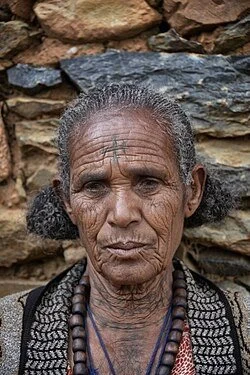
Ethiopian Orthodox woman from Tigray with traditional Niksat face markings. Photo by Rod Waddington, via Wikimedia Commons Licensed under CC BY-SA 2.0
I'm not an expert in this tradition, and I won't pretend to be. If it's part of your heritage, or you want to understand its meaning more fully, the writers and historians who've done that work are the right people to read.
What I can say plainly is this: the tradition deserves respect, the people asking about it for cultural reasons aren't being silly, and the version showing up in viral videos today doesn’t seem to be the same thing as what Nekash were doing.
How the Modern "Blackout Gums" Trend Is Different
What's trending online today is usually shown as "blackout gums," often without much context around where it came from.
The technique has changed too. Modern videos almost always show a coil or rotary tattoo machine being run along the gum line with tattoo ink. Not soot, not plant pigment, not a hand tool.
That is a meaningfully different procedure with different risks. It’s being presented the same way online, but it’s not really the same thing in practice.
Is Gum Tattooing Safe? What the Research Actually Says
From everything I’ve been able to find looking into this, here’s the direct answer to is gum tattooing safe: there is no standardized safe protocol for it in any setting I’m aware of, and the documented risks are serious.
The mouth is one of the worst environments on the body to put an open wound. Dental and medical literature flags:
Infection from oral bacteria
Gum recession and tooth root exposure
Periodontitis and eventual tooth loss
Allergic reactions, especially to red pigments
The Machine Problem No One's Talking About
Tattoo machines, whether they're coil or rotary, are built for skin. They're tuned to hit with enough force to pack pigment into the dermis.
Gums aren't built like that. They're thinner, more sensitive, and bleed easily.
So when you run a machine across gum tissue, you're using a pretty aggressive tool on a type of tissue it wasn’t designed for.
If you look back at traditional methods like Niksat, they weren’t using machines. It was slower, more controlled, and better matched to that part of the body.
why We Don't Offer This in Our Shop
Same reason we pass on other trends with unpredictable outcomes.
Two things:
First, the risk. I don’t put work on someone that I don’t believe I can do safely.
Second, insurance. Our policy covers skin tattooing. Gum work falls into intraoral/cosmetic territory, which isn’t covered.
No coverage for you or us if something goes wrong.
Safer Alternatives That Still Honor the Tradition
Talk to a periodontist first, not a tattoo artist
Niksat-inspired face, neck, or chin work from a specialist
Find a hand-poke artist who works in this kind of style
Henna or temporary options for ceremony or celebration
If you’re considering it, feel free to reach out and we can talk through safer options that actually hold up over time.
A Last Word
Niksat deserves more people learning about it, not fewer.
But the version showing up in viral videos doesn’t seem to be the same thing. It looks more like a machine-driven version that comes with a different set of risks.
Knowing the difference protects both your health and the tradition itself.
Further Reading
Chris Cockrill is a San Diego tattoo artist at Remington Tattoo in North Park. This article is for educational purposes and is not a substitute for medical or dental advice.