
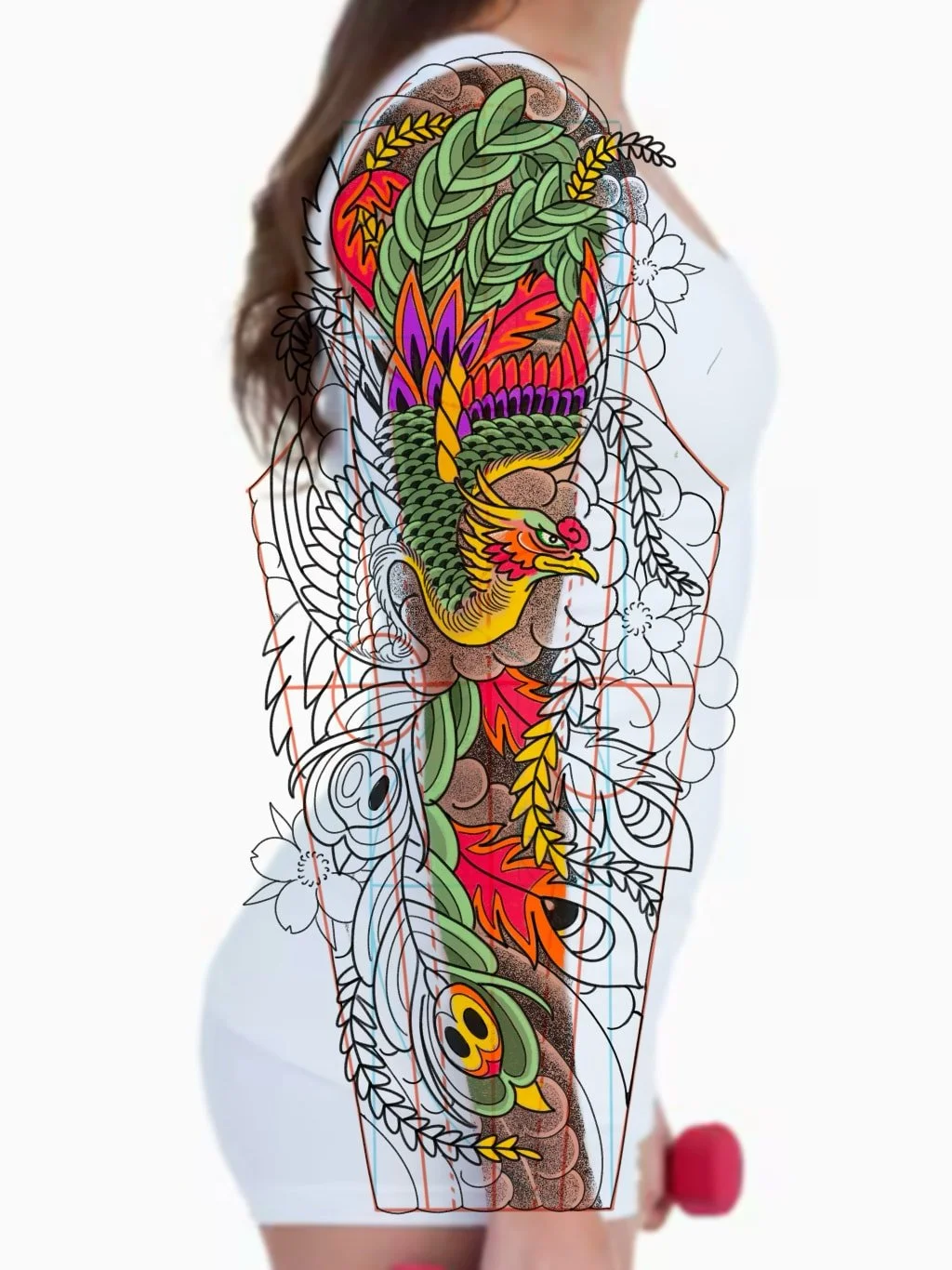
Full sleeve mock up as an exercise in flow and placement.
The Hou-ou (鳳凰) is a Japanese phoenix sleeve tattoo rooted in transformation, resilience, and rebirth.
Unlike the dragon, it isn’t born powerful.
The phoenix transforms through struggle and only becomes divine after rebirth. Because of that, it has long been used as a symbol of resurrection and new beginnings, victory after hardship, loyalty, justice, and the immortal soul.
In Japanese tattooing, the Hou-ou is associated with fire, while the dragon represents water. Together, they form a balance of opposing forces, often described as yin and yang.
Japanese Phoenix Sleeve Tattoo | Meaning and Symbolism
I’ve always felt the phoenix is an especially strong tattoo for people who have endured repeated defeats and still managed to get back on their feet. It isn’t about winning easily. It’s about survival, endurance, and rebuilding yourself after things fall apart more than once. In a Japanese phoenix sleeve tattoo, the meaning goes beyond imagery and focuses on endurance, balance, and long-term growth rather than instant power. In traditional imagery, the phoenix is also considered the feminine counterpart to the dragon. Where the dragon represents force, control, and outward power, the phoenix carries grace, resilience, and inner strength. Neither is complete without the other. Together, they represent balance.
That combination is why the phoenix works so well as a sleeve. It carries weight without aggression. The story is quiet, earned, and personal.
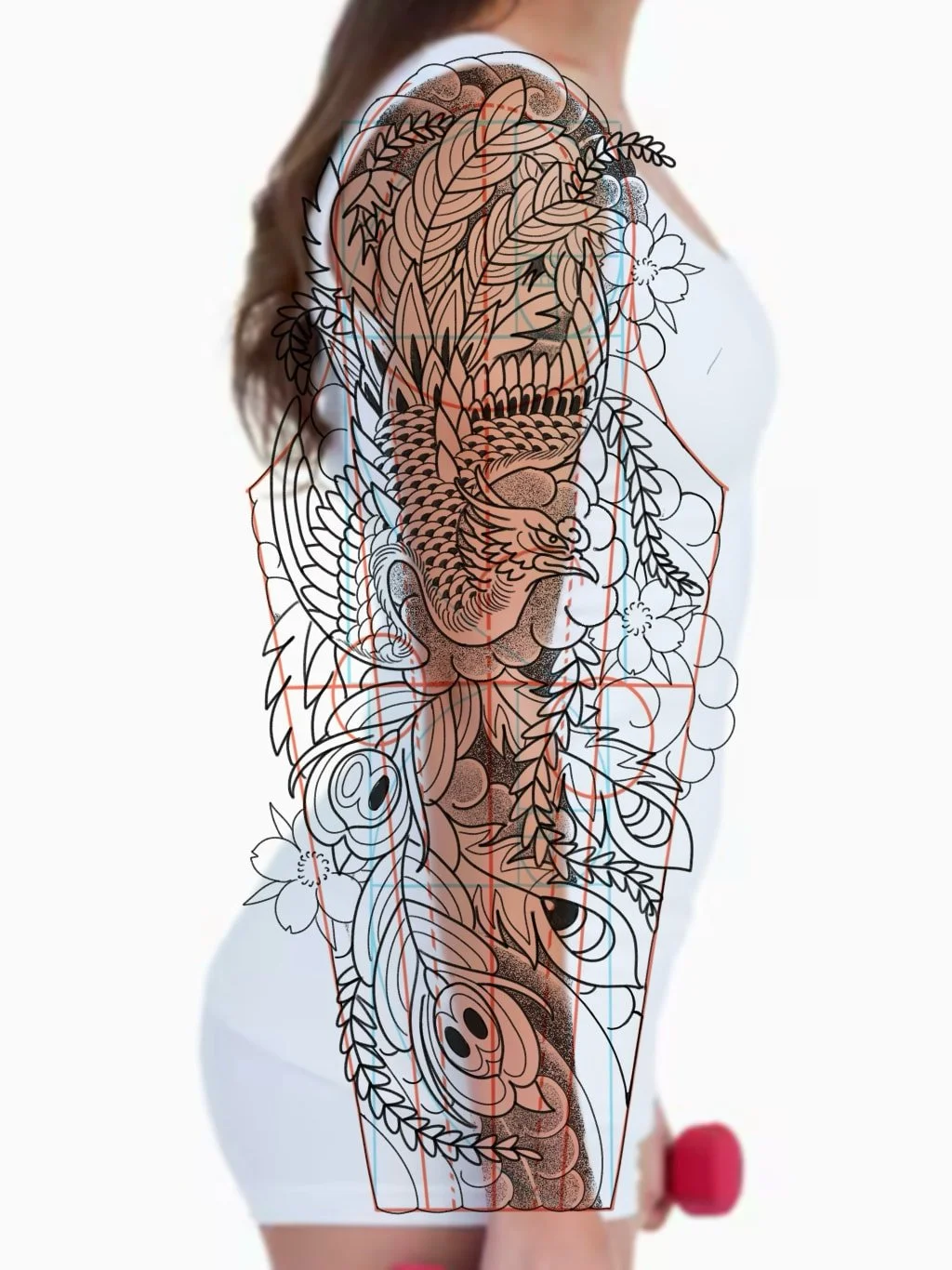
The shaded version pre color to map out the values.
What I Look For in a Strong Phoenix Sleeve
A strong phoenix sleeve isn’t about flames.
It’s about flow, movement, and shaping the design to the arm before any color ever touches skin. If the structure isn’t right first, the tattoo ends up sitting on top of the body instead of moving with it.
Before I think about color, I map the design to the shoulder, elbow, and forearm rotation. The goal is for the tattoo to read clearly whether the arm is relaxed or in motion, and to hold together over decades, not just the first few years.
How This Hou-ou Design Was Built
Every line in this sleeve was drawn with the body in mind from the start. The feathers guide the eye through the arm, the negative space gives it room to breathe, and the overall movement stays balanced no matter the angle.
This is the same approach I use for all large-scale Japanese tattoo work. Flashy ideas fade fast. Good structure lasts.
Availability and Custom Options
This exact Hou-ou phoenix sleeve design is available.
If the symbolism speaks to you but you want something built specifically for your body, I can also create a similar custom design tailored to your arm and how it moves.
If this piece connects with you, feel free to reach out and we can talk it through.
About the Artist
Chris Cockrill is a Japanese tattoo artist in San Diego, specializing in traditional irezumi phoenix (Hou-ou) sleeve tattoos at Remington Tattoo in North Park.
He designs large-scale Japanese tattoos with a focus on body flow, long-term aging, and symbolism rooted in traditional Japanese imagery. His phoenix tattoo designs emphasize movement, balance with dragon imagery, and sleeves that are mapped to the arm before color is applied.
Specialties include:
Japanese phoenix (Hou-ou) sleeve tattoos
Dragon and phoenix paired designs
Traditional irezumi sleeves
Custom Japanese tattoo compositions built for longevity