
Hannya Mask Tattoo Meaning, and One I Made in San Diego
The Hannya mask is one of the most recognizable images in Japanese tattooing.
People are drawn to the Hannya for a lot of reasons, but the meaning is more complicated than just calling it a demon mask.
If you're curious about the Hannya mask tattoo meaning, here's where the image comes from, what some of its details represent, and an example of how I used one in a back piece that mixed Japanese and American traditional tattooing.
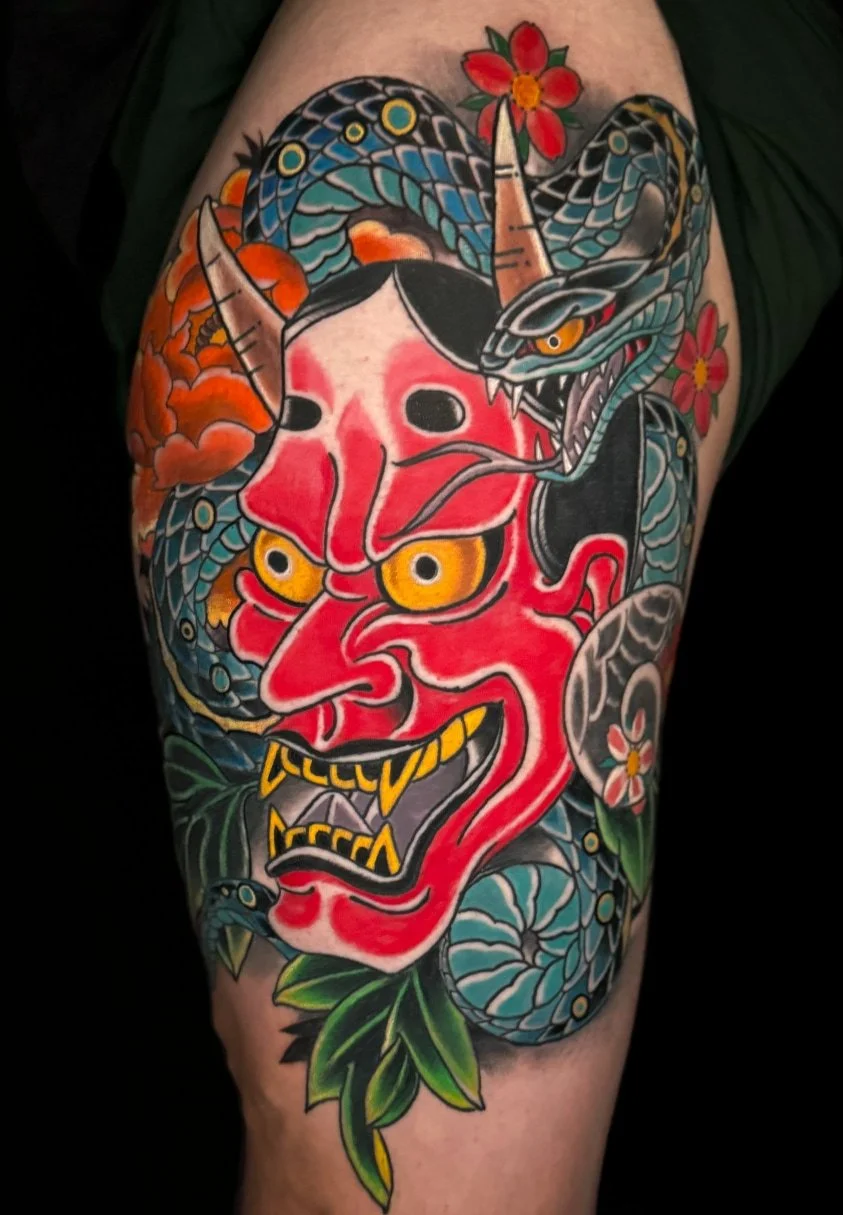
In-progress Hannya Mask tattoo done at Remington Tattoo in North Park San Diego
What's the Real Hannya Mask Tattoo Meaning?
The Hannya started as a mask in Noh theater, worn on stage to play a woman consumed by jealousy and rage. As a tattoo, though, it doesn't have one simple meaning. Online it all gets flattened into a single definition. A rose means this, a swallow means that, a Hannya means overcoming your inner demons. It usually isn't that simple.
In The Secrets of Irezumi, Horifune describes the Hannya as representing revenge, wisdom, suffering, jealousy, guilt, anger, passion, and happiness. He also calls it a symbol of the struggle between good and evil and a protective talisman against evil spirits.
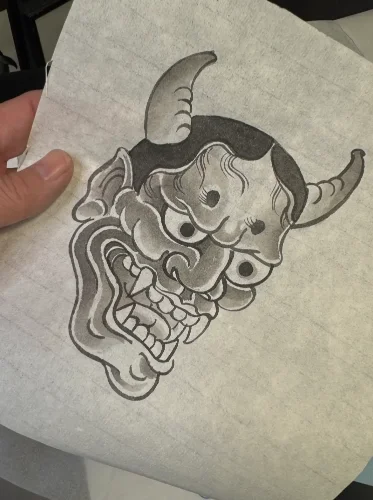
Hannya mask painted in sumi ink on rice paper, traditional Japanese style, by Chris Cockrill
That's a much broader meaning than the simple definitions you usually find online.
A Hannya tattoo can connect with anger, jealousy, suffering, transformation, protection, or the struggle between different sides of human nature.
Sometimes somebody has a personal connection to that symbolism. Sometimes they've been drawn to Japanese tattooing or folklore for years. And sometimes they just think a Hannya makes a great tattoo.
That's okay too. Not every tattoo needs a five-paragraph explanation.
What the Details of a Hannya Mean
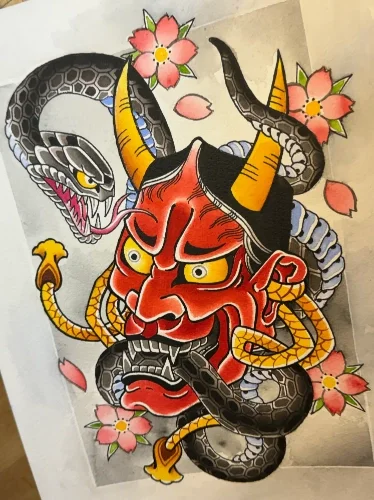
Hannya mask painted in watercolor by Chris Cockrill
The appearance of the Hannya can carry meaning.
According to Horifune, the longer the horns and the redder the face, the further the transformation has gone into anger and vengeance. A lighter face suggests that more of the woman's humanity remains.
The traditional colors carry their own meaning too. Horifune breaks them into three:
Shiro Hannya: A white Hannya associated with a noblewoman.
Aka Hannya: A red Hannya associated with a working-class woman.
Kuro Hannya: A black Hannya associated with a woman from the wilderness or mountains.
This gives you a lot to work with when designing a Hannya tattoo. The expression, horns, color, and overall treatment can push the image in different directions instead of every Hannya looking exactly the same way.
Hannya vs. Oni: What's the Difference?
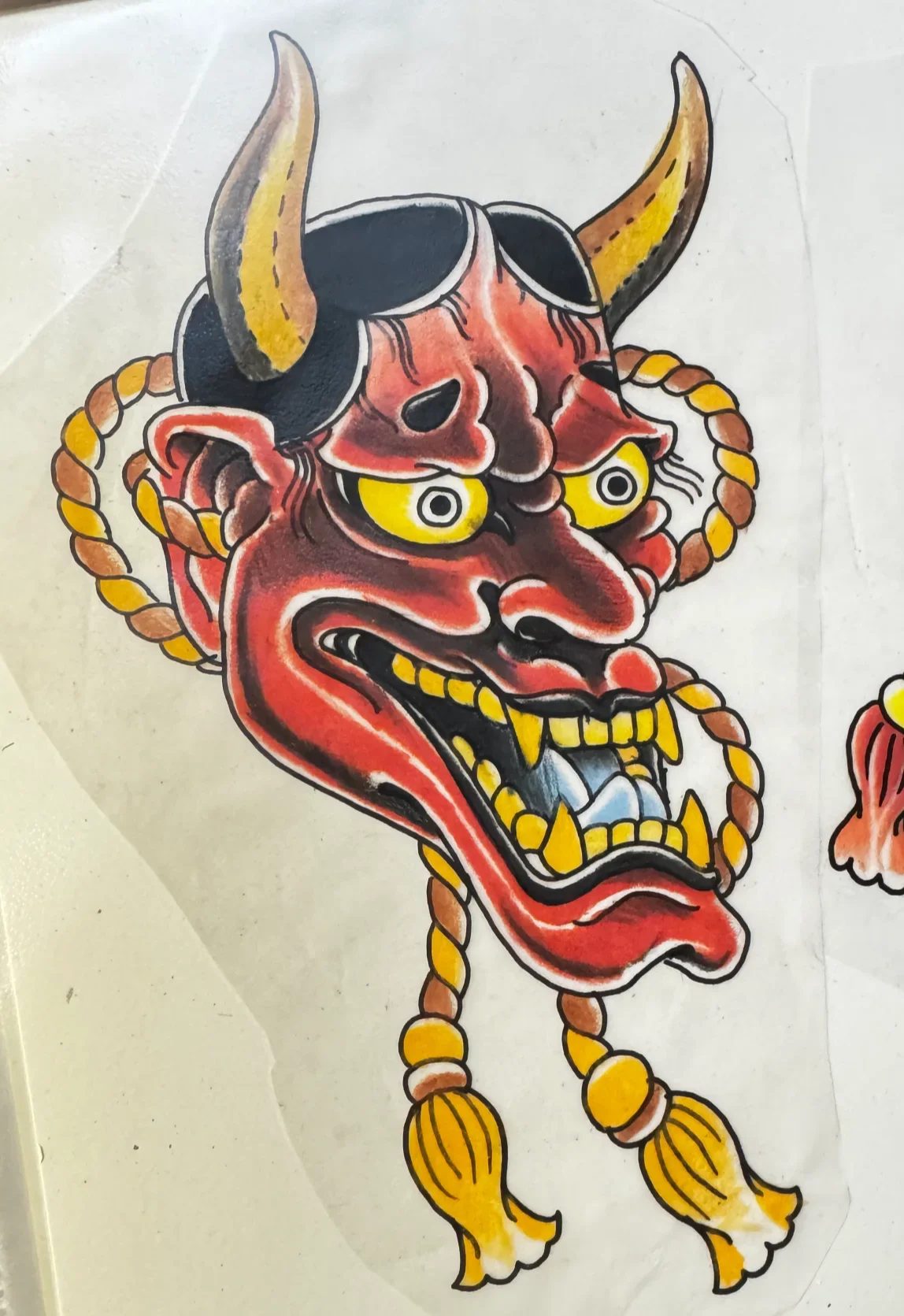
Hannya mask tattoo design in colored pencil, available to tattoo, by Chris Cockrill in San Diego
Hannya masks are often confused with Oni, but they aren't the same thing.
They can look similar at first glance, both may have horns, sharp teeth, and wild hair, but they come from different stories. Oni are a whole separate type of demon in Japanese folklore and can be male or female. The Hannya is specifically a person transformed by her own emotions, and that's a big part of what makes the image so complex.
From the Stage to Japanese Tattooing
Japanese tattooing has always drawn from the larger visual culture around it. Woodblock prints, mythology, religion, folklore, theater, and historical stories all became source material for tattoo designs.
The Hannya fits naturally into that tradition.
It also happens to make a great tattoo. The face has a strong silhouette. The horns give the design direction. The hair creates movement, and the expression gives you a lot to work with.
The image can also be interpreted in many different ways while still clearly reading as a Hannya.
One I Made: A Hannya and Swallows Back Piece
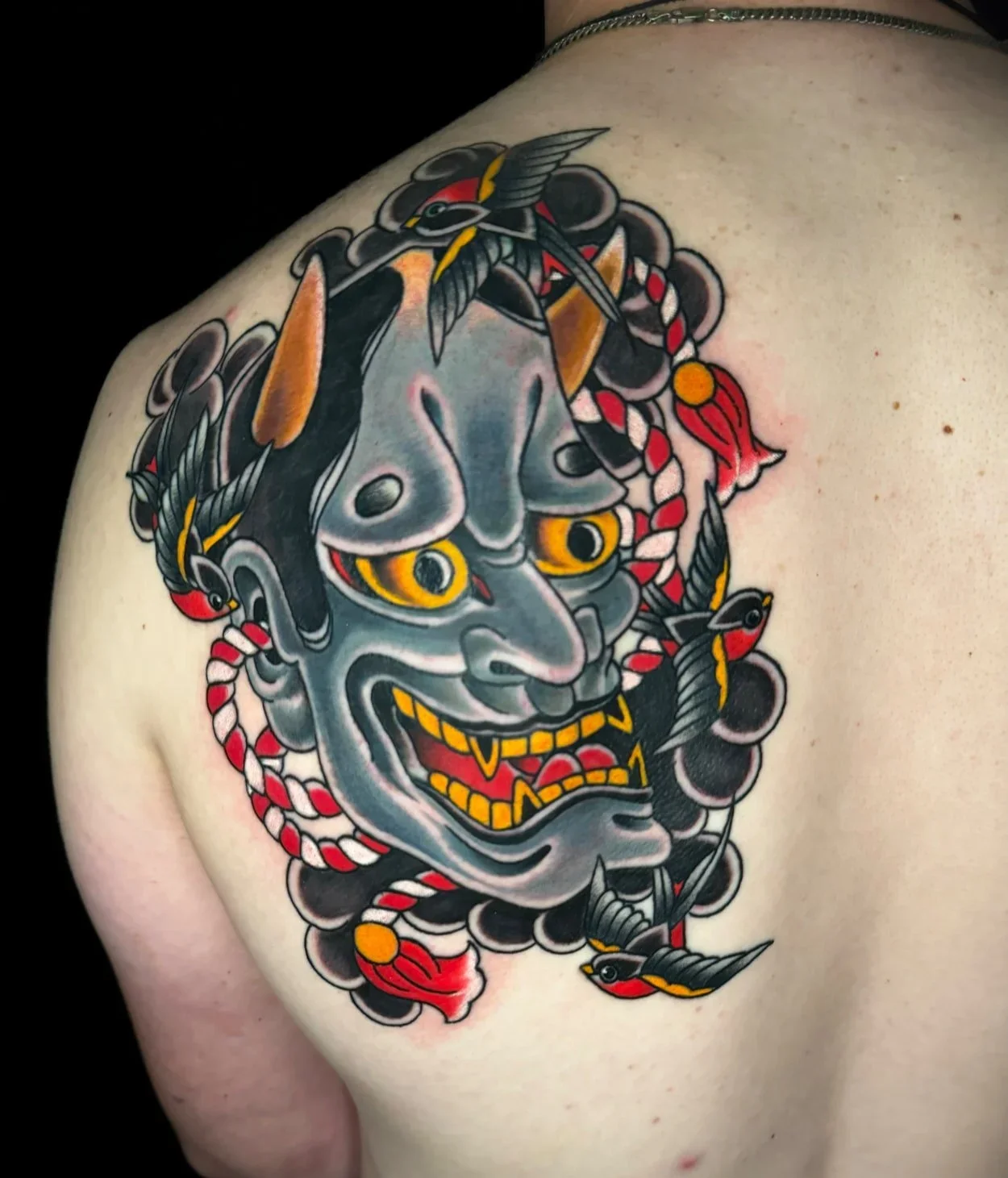
Hannya mask and swallows tattooed by Chris Cockrill
A while back, I made a Hannya back piece with a pair of swallows moving around it.
The Hannya was the main image, while the swallows were drawn with more of an American traditional influence. At first glance, it looks like a mix of two different tattoo traditions, but the swallows also have an interesting connection back to Japanese history.
Tsubame Gaeshi, or Tsubamegaeshi, was a secret swordsmanship technique famously associated with the swordsman Sasaki Kojirō. Tsubame refers to the swallow, and the technique is traditionally described as a rapid downward strike followed immediately by an upward reversal of the blade, compared to a swallow quickly changing direction in flight. The name is commonly translated as "swallow return" or "returning swallow."
That gave the swallows another layer in this tattoo. Stylistically, they brought some American traditional tattooing into the piece, but the Tsubame Gaeshi reference connected the same imagery back to Japanese culture.
A Few Questions About Hannya Mask Tattoos
-
Traditionally, the Hannya represents a woman transformed into a demon through powerful emotions such as jealousy, anger, and resentment. In Japanese tattooing, it can carry additional associations with suffering, transformation, protection, and the struggle between different sides of human nature.
-
It's more complicated than that. The Hannya looks demonic, but its story begins with human emotions. The expression can carry both anger and sorrow, which is a big part of what makes the image so interesting.
-
No. They can look similar, but they come from different traditions. A Hannya is specifically associated with a woman transformed through powerful human emotions, while Oni are a different type of demon in Japanese folklore.
-
Anywhere with enough room for the design to move. The back, arm, chest, and thigh can all work well. The best placement depends on the size of the tattoo and what other imagery will be included.
Getting a Hannya Tattoo in San Diego
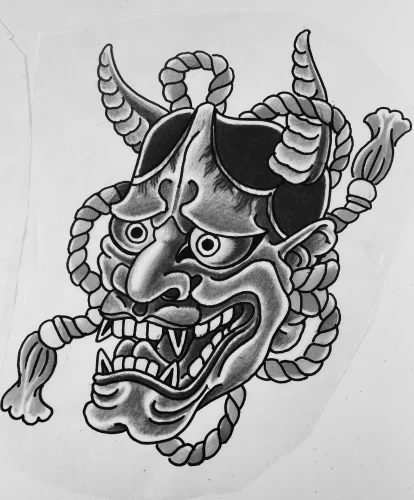
Colored pencil Hannya mask design ready to tattoo at Remington Tattoo in San Diego
One of the things I like about the Hannya is how flexible it is. It can be a small one-shot just about anywhere on the body, or the centerpiece of something bigger like a back piece or a sleeve. On a larger tattoo you can build the design around the body instead of just dropping a mask in the middle of it, which is something Japanese tattooing does especially well. Color or black and grey both work. The main thing is designing the Hannya for the person and the placement. Whatever the Hannya mask tattoo meaning is to you, we can build the piece around it.
I've been tattooing since 1998 and working in San Diego since 2003, with years in both Japanese and American traditional work. You don't need the whole piece figured out before you come in. One strong idea is usually enough to start, and we can sort out the composition, placement, and supporting imagery from there.
If you want to talk about a Hannya or another Japanese tattoo, get in touch or book a consultation.